
Understanding Ladies Ring Size: A Comprehensive Guide
Navigating ladies’ ring sizes requires precision, as variations exist between standards and individual finger characteristics.
This guide details methods for accurate measurement,
conversion charts, and considerations for comfortable, secure fit, ensuring a perfect selection.
What is Ring Size and Why Does it Matter?
Ring size refers to the inner circumference of a ring, typically measured in millimeters or using numerical sizes – a system varying across countries. Determining the correct size is paramount for both comfort and aesthetics; a ring that’s too tight can constrict blood flow and be uncomfortable, while one that’s too loose risks slipping off and getting lost.

Accurate sizing ensures the ring sits securely on the finger without causing discomfort during daily activities. Factors like temperature and time of day can influence finger size, as fingers tend to swell in warmer weather or later in the day. Understanding these nuances is crucial for a precise fit. Furthermore, the style of the ring – wide bands versus delicate designs – can also impact the ideal size, necessitating adjustments for optimal wearability and a beautiful appearance.
Standard Ring Size Chart for Women
The most common standard for women’s ring sizes is the US numerical system, ranging from size 3 to 10, often in half sizes (e.g., 6.5). Corresponding to these numbers are inner circumference measurements in millimeters. A size 6, for instance, typically has an inner diameter of 16.5 mm, while a size 7 measures around 17.3 mm.
However, it’s vital to remember these are averages, and slight variations can occur between manufacturers. A general chart shows size 5 equating to 15.7 mm, 6 to 16;5 mm, 7 to 17.3 mm, 8 to 18.1 mm, 9 to 18.9 mm, and 10 to 19;8 mm. Utilizing a printable ring sizer or comparing to a ring that already fits well remains the most reliable method, as individual finger shapes and ring styles can influence the perfect fit.
Methods for Determining Ring Size
Accurately determining ring size involves several approaches, each with its advantages. The most accessible is using a printable ring sizing chart – download, print (ensuring accurate scaling!), and slip your ring over the circles to find the best match. Alternatively, the string or paper method involves wrapping a thin strip around your finger and marking the meeting point, then measuring its length in millimeters.
For the most precise result, a professional sizing at a jeweler is recommended. They possess specialized tools and expertise to account for knuckle size and ensure a comfortable fit. Remember to measure at the end of the day, when fingers are slightly warmer and potentially larger. Considering these methods provides a reliable path to finding the perfect ring size.
Using a Ring Sizing Chart (Printable)
A printable ring sizing chart is a convenient, cost-effective method for determining your ring size at home. Numerous charts are available online; download one and print it, crucially ensuring the scale is 100% accurate – check the test square to confirm. Carefully slip your ring onto the various circle sizes on the chart until you find a perfect match.
If you don’t have a ring to measure, wrap a strip of paper around your finger, mark the overlap, and compare that length to the chart’s millimeter measurements. Remember that accuracy is paramount; a slightly off-scale printout can lead to an incorrect size. This method offers a good starting point, but professional sizing is still recommended for valuable rings.
The String or Paper Method

The string or paper method provides a simple, accessible way to estimate your ring size without specialized tools. Take a non-stretchable string or a thin strip of paper and wrap it snugly around the base of the finger you intend to wear the ring on. Mark the point where the string or paper overlaps.
Measure the length of the string or paper from the end to the marked point in millimeters. Then, consult a ring size chart (easily found online) to correlate the measurement with a corresponding US ring size. It’s vital to ensure the string isn’t too tight or too loose for an accurate reading. This method is best used as a preliminary estimate before confirming with a jeweler.
Visiting a Jeweler for Professional Sizing
For the most accurate ring size determination, a visit to a professional jeweler is highly recommended. Jewelers possess specialized ring sizers – calibrated metal rings – to precisely measure your finger’s circumference. This method accounts for variations in finger shape and size, offering a more reliable result than self-measurement techniques.
A skilled jeweler will also consider your knuckle size, ensuring the ring comfortably passes over it. They can assess if your knuckle is significantly larger than the base of your finger, which may necessitate a slightly larger size. Don’t hesitate to discuss your lifestyle and preferences with the jeweler; they can offer tailored advice for the perfect fit and lasting comfort.
Understanding US Ring Sizes
The United States employs a numerical ring sizing system, ranging from size 3 to 13, typically increasing in half sizes (e.g., 4.5, 5, 5.5). Size 3 generally fits a finger circumference of approximately 44.5 mm, while size 13 corresponds to around 64.1 mm. It’s crucial to remember that these are averages, and individual finger shapes can influence the ideal size.
Most women’s ring sizes fall between 5 and 9. However, variations are common. A size 7 is often considered the average, but this isn’t universally true. Understanding that finger size can fluctuate due to temperature, time of day, and other factors is vital for selecting a comfortable and secure fit. Accurate measurement is key to avoiding resizing later.
Converting Ring Sizes: US vs. International Standards
Ring sizes differ significantly across international standards, necessitating accurate conversion when purchasing from or gifting to someone in another country. The US system is numerical, while many others utilize alphabetical sizing. A US size 7, for instance, doesn’t directly equate to a UK or European size 7.
Converting accurately is crucial to avoid disappointment. Generally, a US size 7 corresponds to a UK/British size N and a European size 16. However, these are approximations. Precise conversion charts are readily available online and at jewelry retailers. Always double-check the specific chart provided by the seller, as slight variations can occur. Understanding these differences ensures a perfect fit, regardless of origin.
UK/British Ring Sizes
The UK ring sizing system employs alphabetical designations, starting from A (the smallest) and progressing to Z and beyond, utilizing fractional increments like ½ sizes. This system differs substantially from the numerical US standard, requiring careful conversion for accurate fit. A typical UK size range for women falls between G and P, though variations exist based on individual finger dimensions.
Determining your UK size often involves using a set of ring gauges, commonly available at jewelers. Alternatively, printable sizing charts can offer a reasonable estimate, though professional measurement is recommended for precision. Remember that knuckle size can influence the optimal fit; a slightly larger size may be necessary to comfortably accommodate the knuckle.
European Ring Sizes

European ring sizes utilize a numerical system, closely aligned with the French metric standard, expressed in millimeters representing the inner circumference of the ring. This differs from both US and UK systems, necessitating conversion for accurate sizing. Typically, European sizes range from 40 to 68, with each number corresponding to a specific millimeter measurement.
To determine your European size, measuring the inner circumference of an existing ring with a ruler (in millimeters) is a practical approach. Online conversion charts readily translate US or UK sizes into their European equivalents. However, professional sizing at a jeweler ensures the most precise fit, accounting for individual finger variations and knuckle size. Remember that slight discrepancies can occur between manufacturers.
Factors Affecting Ring Size
Several physiological and environmental factors can influence ring size, leading to fluctuations throughout the day and year. Time of day plays a role, as fingers tend to swell slightly in warmer temperatures or after physical activity. It’s best to measure your finger size later in the day when it’s at its largest.
Temperature also impacts finger size; warmer weather causes expansion, while cold weather leads to contraction. Furthermore, knuckle size often differs from the base of the finger, requiring a ring large enough to comfortably pass over the knuckle but not spin freely on the base. Consider these variables when selecting a ring, and prioritize comfort alongside accurate measurement for a lasting, enjoyable fit.
Time of Day & Temperature
Finger size isn’t constant; it fluctuates throughout the day, primarily due to fluid retention and temperature changes. Measuring your finger in the morning, when it’s typically cooler and less swollen, will yield a smaller size than an evening measurement. Therefore, it’s recommended to measure later in the day, after activity, for a more accurate fit.
Temperature significantly impacts finger size too. Warm weather causes fingers to expand, while cold temperatures cause them to contract. A ring that fits perfectly in the summer might feel snug in the winter. Account for seasonal variations when choosing a ring, and consider a slightly looser fit if you live in a climate with extreme temperature swings, ensuring comfort year-round.
Knuckle Size vs. Finger Base Size
A common challenge in ring sizing is accommodating the difference between the finger’s base circumference and the knuckle circumference. Many individuals have knuckles larger than the base of their finger, meaning a ring that slides easily over the knuckle might spin freely on the base. This requires careful consideration during sizing.
Measure both the base and the knuckle to determine the largest measurement. If the knuckle measurement is larger, size the ring accordingly to ensure it passes over the knuckle comfortably. However, avoid making it excessively loose, as this can lead to loss or discomfort. A jeweler can often suggest styles that accommodate larger knuckles, like rings with slightly thicker bands or designs that offer a more secure fit;
Ring Size for Different Finger Types
Finger shape significantly impacts ring fit; slender fingers often require more precise sizing than wider fingers. Fingers with prominent joints may need a larger size to comfortably pass over the knuckle, while those with tapered shapes might spin easily if the ring isn’t snug enough at the base.
Consider the overall hand size and finger length. Shorter fingers may appear to have a larger ring size, while longer fingers can accommodate wider bands. It’s crucial to try rings on different fingers to assess how they feel and look. Remember that ring size isn’t universal; it’s specific to each finger and individual hand anatomy. Professional sizing is recommended for optimal fit and comfort.
Sizing Rings for Wide Band Styles
Wide band rings necessitate a different sizing approach compared to delicate, thin bands. Due to the increased surface area, wider bands generally fit more snugly and may require a half or even a full size larger than your standard ring size. This is because they occupy more space on the finger and can feel constricting if sized the same as a thinner ring.
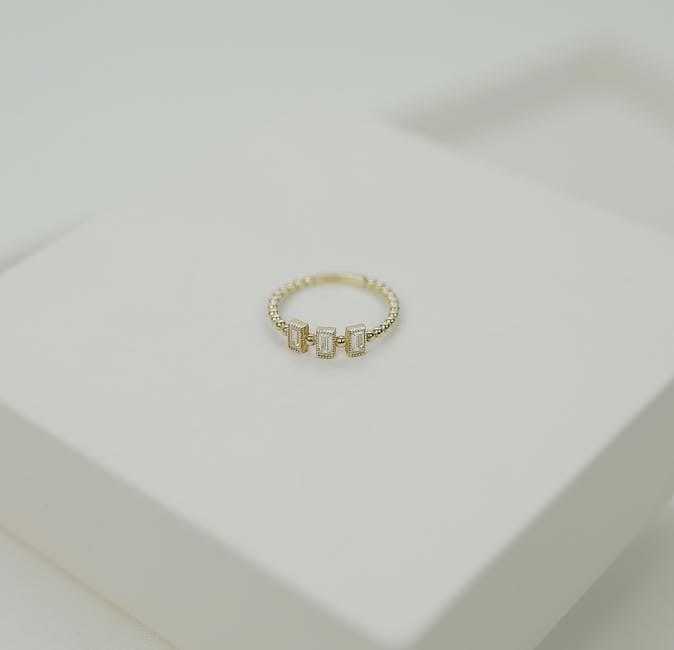
Consider the width of the band itself – the wider it is, the more significant the size adjustment will be. Always try on a wide band ring in person if possible, or utilize a sizing kit specifically designed for wider styles. Professional jewelers can accurately measure your finger for a wide band, ensuring a comfortable and secure fit that won’t feel overly tight or prone to spinning.
Sizing Rings with Unique Designs
Rings featuring unconventional designs – such as intricate patterns, asymmetrical shapes, or substantial embellishments – present unique sizing challenges. These designs can affect how the ring sits on the finger and how comfortably it moves. A ring with a large center stone, for instance, might require a slightly larger size to accommodate the stone’s presence and prevent it from catching on clothing or other surfaces.
Consider the design’s impact on finger movement. Rings with bulky undercarriages or elaborate gallery work may necessitate a half size increase. Professional sizing is highly recommended for these rings, as standard sizing charts may not accurately reflect the required fit. A jeweler can assess the design and provide a precise measurement, ensuring both comfort and security.
The Oura Ring Sizing Guide (Specific Measurements)
Oura ring sizing deviates from traditional US ring sizes, necessitating careful attention to their specific measurements for an accurate fit. The inner diameter, particularly at the sensor bump, is crucial for determining the correct size. Measurements provided by users with calipers reveal variations; a size 7 Oura, for example, measures approximately 17.60mm inner diameter (15.97mm at the bump), slightly differing from a standard size 7 at 17.36mm.
These measurements highlight the importance of referencing Oura’s guide directly. Ring thickness remains consistent across sizes (2.91mm), but the bump diameter significantly impacts fit, especially over knuckles. Consider the bump’s diameter when selecting a size, prioritizing comfortable passage over the knuckle. Variations may occur between sizing kits, so precise measurement is key.
Oura Ring Size 6 Measurements
For Oura Ring size 6, precise measurements are essential due to the brand’s unique sizing system. Caliper readings indicate an inner diameter of 16.76mm for the ring itself. However, the critical measurement lies at the sensor bump, registering at 15.21mm. This difference is vital, as the bump’s diameter dictates how easily the ring passes over the knuckle.
Compared to standard ring sizing, Oura’s size 6 may feel slightly different. The ring’s consistent thickness of 2.91mm and height of 7.88mm remain constant across all sizes. Prioritize the bump measurement when assessing fit, ensuring comfortable movement without constriction. These figures provide a valuable reference point, especially for those unfamiliar with the Oura ring’s specific fit characteristics.
Oura Ring Size 7 Measurements
Determining the correct Oura Ring size 7 requires careful attention to detail, as it deviates from traditional US ring sizes. Caliper measurements reveal an inner diameter of 17.60mm for the ring body. Crucially, the inner diameter at the sensor bump measures 15.97mm – a key factor for knuckle clearance and comfortable wear.
Notably, a comparison with a physical size 7 ring showed a slight discrepancy; the kit’s measurement was marginally larger (17.60mm vs. 17.36mm, and 15.97mm vs. 15.91mm). The ring’s consistent dimensions – 2.91mm thickness and 7.88mm height – remain unchanged. Focus on the bump diameter for accurate sizing, particularly if you have prominent knuckles, ensuring a secure yet comfortable fit throughout the day.
Oura Ring Size 8 Measurements
Accurately gauging Oura Ring size 8 necessitates precise measurements, diverging from standard US ring sizing conventions. Utilizing a caliper, the ring’s inner diameter registers at 18.43mm, while the critical inner diameter encompassing the sensor bump measures 16.81mm. This bump diameter is paramount for ensuring the ring smoothly navigates the knuckle during wear and activity.
It’s important to note that the ring maintains consistent dimensions – a thickness of 2.91mm and a height of 7.88mm – irrespective of size. These measurements are consistent across all sizes within the kit. Prioritizing the bump diameter is crucial, especially for individuals with larger knuckles, to guarantee both a secure and comfortable fit throughout daily use. Slight variations may occur between kits.
Oura Ring Size 9 Measurements
Determining the correct Oura Ring size 9 requires careful attention to detail, as it deviates from traditional US ring sizing. Caliper measurements reveal an inner diameter of 19.25mm for the ring itself, and a crucial 17.63mm inner diameter where the sensor bump is located. This bump diameter is particularly important for comfortably passing over the knuckle.
Remember that the ring’s physical dimensions – 2.91mm thickness and 7.88mm height – remain consistent across all sizes within the sizing kit. Focusing on the bump diameter is vital, especially for those with prominent knuckles, to ensure a secure yet comfortable fit during everyday activities. It’s worth noting that slight discrepancies can occur between individual sizing kits due to manufacturing variations.
Oura Ring Size 10 Measurements
Accurately assessing Oura Ring size 10 necessitates precise measurements, diverging from standard US ring sizes. Caliper readings indicate a 20.02mm inner diameter for the ring body, and a critical 18.41mm inner diameter at the sensor bump location. Prioritizing the bump diameter is essential for smooth knuckle passage and overall comfort.
Keep in mind that the ring’s consistent dimensions – 2.91mm thickness and 7.88mm height – apply across all sizes within the kit. Concentrating on the bump diameter is paramount, particularly for individuals with larger knuckles, to guarantee a secure and comfortable fit throughout daily wear. Slight variations between sizing kits are possible due to manufacturing processes, so consider this when determining your ideal size.
What to Do if Your Ring Doesn’t Fit
Discovering a ring doesn’t fit can be frustrating, but several solutions exist. Resizing, either up or down, is a common and often effective option performed by a professional jeweler. For a slightly too-large ring, temporary fixes can provide immediate relief. Ring guards, small plastic inserts, can reduce the ring’s diameter, offering a snugger fit until permanent resizing is possible.
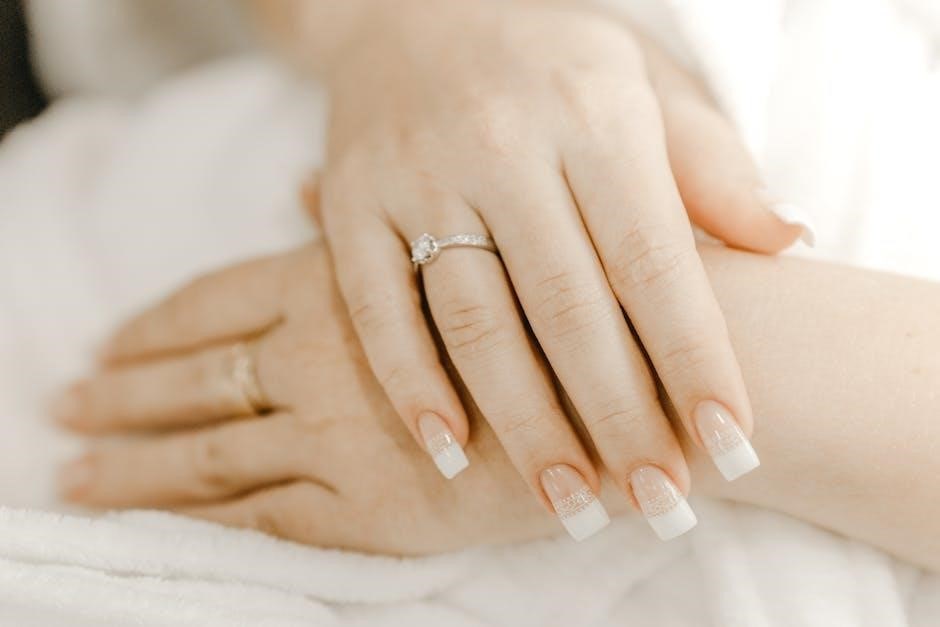
Alternatively, consider the time of day and temperature, as fingers can swell or shrink. If swelling is the issue, avoid wearing the ring during peak swelling times. Professional resizing is recommended for significant adjustments, ensuring the ring’s structural integrity isn’t compromised. Don’t attempt DIY resizing, as it could damage the ring.
Resizing Options: Up and Down
Resizing a ring involves adding or removing metal to alter its circumference, accommodating changes in finger size. Increasing a ring’s size (sizing up) typically involves stretching the existing metal or adding additional material, like a small section of metal soldered into the shank. Decreasing a ring’s size (sizing down) requires removing metal, often by cutting and re-soldering the band.
The feasibility of resizing depends on the ring’s design; rings with intricate details or pave settings may have limited resizing capacity. A jeweler will assess the ring and advise on the best approach. Complex designs might necessitate rebuilding portions of the shank. Resizing costs vary based on the metal type and complexity of the work, but ensures a comfortable and secure fit.
Temporary Fixes for a Slightly Too-Large Ring
If a ring is slightly too large, several temporary fixes can prevent loss while awaiting professional resizing. Ring guards, small plastic or metal inserts placed inside the shank, reduce the ring’s diameter. These are inexpensive and readily available, offering a quick solution for a loose fit.
Another option is using thread or silicone tubing wrapped around the shank to create a snugger fit. This is a DIY approach, but requires careful application to avoid damage. Be mindful that these are temporary solutions and don’t offer the security of a properly resized ring. For valuable or sentimental pieces, professional resizing remains the recommended long-term solution, ensuring both fit and security.

Leave a Reply
You must be logged in to post a comment.